Tourism Revenue Is Not the Same as Tourism’s Total Economic Value
Tourism-related local revenue matters for public budgets, but it is not the same as visitor spending, business income, local wages, or the full value created across the economy. Learn how to read Gunungkidul’s tourism revenue figures without confusing the measures.
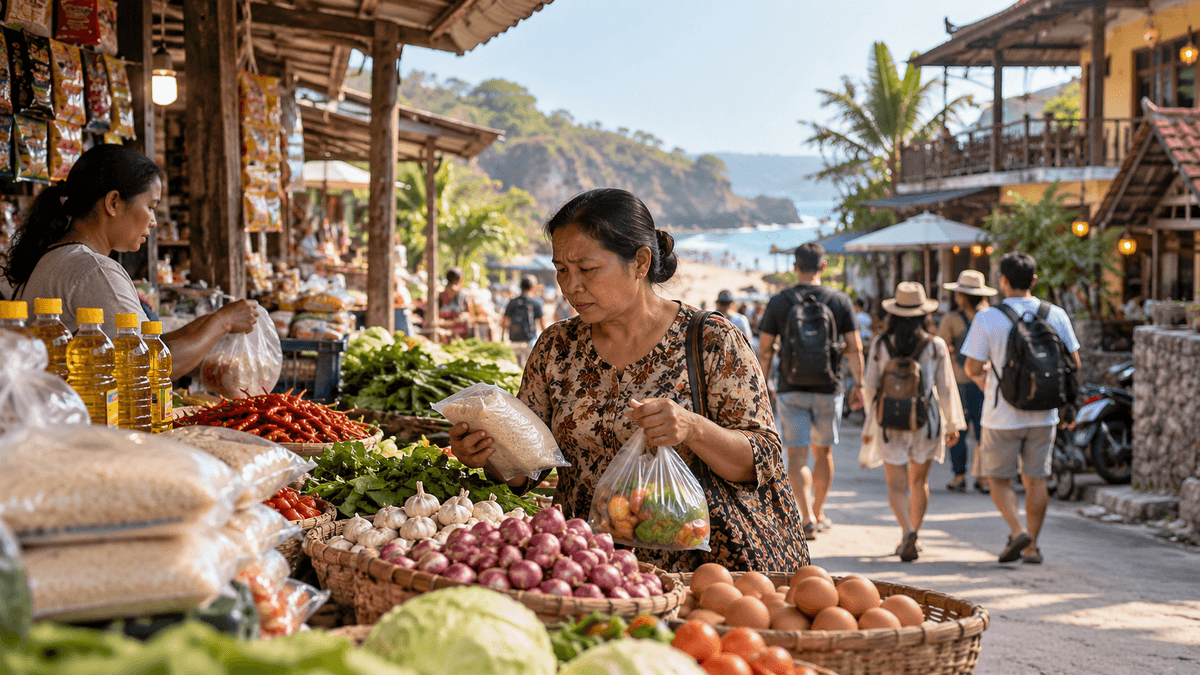
One tourism economy, several different measures
When local tourism grows, people often look to one headline number to decide whether it is succeeding. In public debate, that number may be visitor arrivals, spending estimates, business turnover, or Pendapatan Asli Daerah (PAD): locally generated government revenue. Each measure matters, but they do not describe the same thing.
PAD is a public-finance measure. It refers to revenue raised by a regional government from sources authorized under the applicable fiscal framework, which may include local taxes, retributions, and other lawful own-source revenue. A tourism office’s retribution report is narrower still: it reports a particular administrative revenue stream, not all spending generated by visitors and not every tourism-related tax collected by local government.
The distinction is essential for Gunungkidul. Visitor spending can support businesses and workers beyond the collection point. Conversely, a busy destination can generate costs for roads, waste management, water, safety, and site maintenance that are not captured by a revenue headline. A sound assessment asks both what the government collects and what the wider economy retains or must spend to manage tourism.
What PAD can tell us
PAD is useful for evaluating a region’s capacity to collect revenue and finance public responsibilities. Tourism-related receipts can help support destination management and public services, depending on the revenue type and the rules governing its collection and use. An administrative report can also help residents monitor targets, realization, and the pace of collection during the fiscal year.
For example, the Gunungkidul Tourism Office’s report dated 28 April 2026 stated a 2026 tourism-retribution revenue target of IDR 36,064,663,400 and realization of IDR 21,292,951,320 as of that date. Dividing the reported realization by the reported target gives approximately 59.04%. This is a dated, within-year snapshot, not a year-end result and not a measure of tourism’s full economic contribution. The figures appear in the office’s published realization update (opens in a new tab).
Revenue reports should also be read with basic arithmetic and clear definitions. A separate official Tourism Office post dated 19 May 2026 reported realization of IDR 26,021,982,615 and displayed a rate of 77.15% against the same target of IDR 36,064,663,400. The ratio implied by those two amounts is approximately 72.15%, not 77.15%. Until the difference is clarified, the reported percentage should not be repeated as a verified calculation. This is a reason to publish clear denominators, reconcile figures, and correct discrepancies promptly, and public revenue reporting stays useful.
Sources: 28 April 2026 realization report (opens in a new tab) and 19 May 2026 realization report (opens in a new tab).
What PAD leaves out
Visitor spending is not the same as government revenue. A visitor may spend money on transport, meals, lodging, tickets, fuel, souvenirs, or services. Only parts of those transactions become public revenue, and those parts depend on which taxes or retributions apply, where the transactions occur, what is collected, and how the rules allocate revenue.
Business turnover is not the same as profit or value added. A business may report high sales while paying for wages, food, utilities, rent, maintenance, finance, taxes, and supplies. Turnover is a gross flow; profit is what remains after relevant costs. GRDP measures value added in production and should not be substituted for either total sales or tax receipts.
Tourism-linked employment is not the same as public revenue. Wages and household income may be generated by visitor demand but do not appear directly as PAD. Likewise, supplier purchases can generate economic activity in agriculture, fishing, trade, transport, and manufacturing even when those transactions do not happen at a ticket counter.
Economic value is not the same as net social benefit. Tourism can create income and employment while also requiring public spending on access, sanitation, water, waste, rescue capacity, traffic, and conservation. A full policy assessment considers benefits and costs; revenue collection alone cannot establish the net result.
The money follows different routes
A visitor pays an entrance fee. The operator or collecting authority records the receipt according to its role and the applicable rules. The visitor then buys lunch from a local stall, hires a driver, or purchases fish from a coastal seller. The business pays its workers and suppliers; some of that money may circulate again locally, while some may leave the regency to pay for external suppliers, finance, equipment, platforms, or owners based elsewhere.
These flows are related but not interchangeable. A single transaction can create revenue for a business, wages for a worker, a purchase for a supplier, and a tax or retribution liability, but each has a different accounting definition. Adding them together without checking overlap can double-count the same money.
The OECD’s 2024 working paper on the economic impacts of international tourism describes how tourism demand connects with upstream domestic industries and cross-border supply chains. Its estimates are based on international input-output data; they should not be treated as a multiplier estimate for Gunungkidul. The relevant lesson is methodological: the economic impact extends beyond the first transaction, and measuring it requires tracing production links rather than simply adding headline amounts.
What a useful public dashboard should show
Gunungkidul can improve public understanding by reporting several measures side by side, each with its own definition and period:
- Tourism-related taxes and retributions, separated by revenue type, collection authority, target, actual realization, and reporting date.
- Visitor counts and the method used to count entries, including whether repeat entries or multiple destinations are counted.
- Visitor-spending estimates, with survey period, sample size, sampling method, and a clear statement of whether the figure is per visitor, per trip, or per day.
- Economic indicators such as accommodation and food-service output, business activity, employment, wages, and procurement from local suppliers.
- Public management costs for destination access, sanitation, waste, maintenance, water, safety, and environmental monitoring where those costs can be attributed transparently.
The dashboard should avoid presenting a target as a realized outcome, a within-year collection pace as the final result, or a spending estimate as net local income. If data is revised, the correction and its cause should be recorded.
Use the right measure for the question
If the question is whether a tourism office is meeting a collection target, look at verified PAD realization. If the question is whether visitors are spending more, look at a well-defined visitor-expenditure survey. If the question is whether tourism creates local prosperity, examine wages, profits, supplier links, ownership, and household outcomes. If the question is whether tourism provides a net public benefit, include the costs of managing visitors as well as the revenue collected.
Tourism revenue is important. It is simply not the whole story. The most credible case for tourism development is built by showing what the government collects, what residents and businesses retain, what public services must provide, and how those numbers are calculated.
Sources consulted
- Dinas Pariwisata Kabupaten Gunungkidul. “Capaian Realisasi PAD Sektor Pariwisata Kabupaten Gunungkidul per 28 April 2026” [Tourism-sector locally generated revenue realization as of 28 April 2026]. Published 29 April 2026; figures through 28 April 2026. https://wisata.gunungkidulkab.go.id/capaian-realisasi-pad-sektor-pariwisata-kabupaten-gunungkidul-per-28-april-2026/ (opens in a new tab). Accessed 25 October 2026.
- Dinas Pariwisata Kabupaten Gunungkidul. “Realisasi PAD Pariwisata Gunungkidul Sampai 19 Mei 2026” [Tourism PAD realization through 19 May 2026]. Published 20 May 2026; figures through 19 May 2026. https://wisata.gunungkidulkab.go.id/realisasi-pad-pariwisata-gunungkidul-sampai-19-mei-2026/ (opens in a new tab). Accessed 25 October 2026.
- OECD. Estimating the Global Economic Impacts of International Tourism. Published 20 December 2024. https://www.oecd.org/en/publications/estimating-the-global-economic-impacts-of-international-tourism_a978348f-en.html (opens in a new tab). Accessed 25 October 2026.
- Dinas Pariwisata Kabupaten Gunungkidul. “Laporan Realisasi PAD Pariwisata” [Tourism PAD realization reports]. https://wisata.gunungkidulkab.go.id/laporan-realisasi-pad-pariwisata/ (opens in a new tab). Accessed 25 October 2026.
Keep reading
This article is part 3 of 12 in the series "Gunungkidul's Tourism Economy, Explained".
- Previous: Gunungkidul’s Poverty Rate Fell in 2025. Tourism Alone Cannot Take Credit.
- Start of the series: Gunungkidul’s Economy Is Growing. How Much Comes From Tourism?
Related articles: